TEENAGE MUTANT NINJA TURTLES
Teenage Mutant Ninja Turtles (TMNT) is a legendary multimedia franchise created in 1984 by comic artists Kevin Eastman and Peter Laird. Originating as a gritty black-and-white indie comic parody, it exploded into a global pop-culture phenomenon encompassing animated and live-action television series, blockbuster feature films, classic video games, and iconic toy lines.




Cronologia
Overview

Created in May 1984 by comic book artists Kevin Eastman and Peter Laird, Teenage Mutant Ninja Turtles has evolved from an obscure indie comic into one of pop culture's most enduring and profitable intellectual properties.
Over its four-decade history, the franchise has continually reinvented itself across media formats while maintaining its core concept of four mutated turtle brothers fighting crime from the sewers of New York City.
The scope of the IP encompasses multiple distinct comic continuity runs—including Mirage Studios' original timeline, Archie Comics' adventure series, and IDW Publishing's record-breaking 150-issue run alongside 'The Last Ronin' expanded universe. In broadcast media, the Turtles have starred in seven television series, ranging from the legendary 1987 animated show to Nickelodeon's CGI iterations and Paramount+'s 2024 release 'Tales of the Teenage Mutant Ninja Turtles'. On the big screen, ten feature films have captured the heroes in a half shell, starting with the 1990 live-action hit up to 2023's 'Mutant Mayhem'. With upcoming projects such as 'Mutant Mayhem 2' slated for 2027 and new video games like 2026's 'TMNT: Empire City' VR experience, the franchise's global reach remains stronger than ever.
Origins

The franchise began as a dark, violent, self-published comic book parody created by Kevin Eastman and Peter Laird under Mirage Studios in May 1984. What started as a lighthearted creative brainstorming session resulted in an oversized black-and-white comic that unexpectedly built a passionate indie cult following.
The property's trajectory shifted dramatically when Playmates Toys was approached to manufacture an action figure line. Cautious about the comic's small following, Playmates requested that a television broadcast deal be secured first. This led to the creation of the 1987 animated miniseries produced by Murakami-Wolf-Swenson and written by David Wise and Patti Howeth.
To make the show suitable for children, the television series softened the darker tone of the Mirage comics, introducing defining elements that permanently altered the lore: color-coded bandanas (blue, red, purple, and orange), distinct weapons, unique catchphrases like 'Cowabunga!', and a love for pizza. Backed by the massive success of the animated show, Playmates released the initial toy line in the summer of 1988, launching the property into a billion-dollar global pop-culture juggernaut.


I PEZZI DI TEENAGE MUTANT NINJA TURTLES




Collecting

For action figure and pop-culture collectors, Teenage Mutant Ninja Turtles represents one of the most vibrant and valuable sectors in the market. The craze began in 1988 with Playmates Toys' vintage figure line, which dominated retail shelves with iconic carded figures, sewer playsets, and vehicles like the Turtle Van and Turtle Blimp.
Today, original mint-in-box (MIB) or unpunched first-wave 1988 figures stand as holy grails, commanding high values on the secondary market. Modern TMNT collecting thrives on high-end detail and nostalgia.
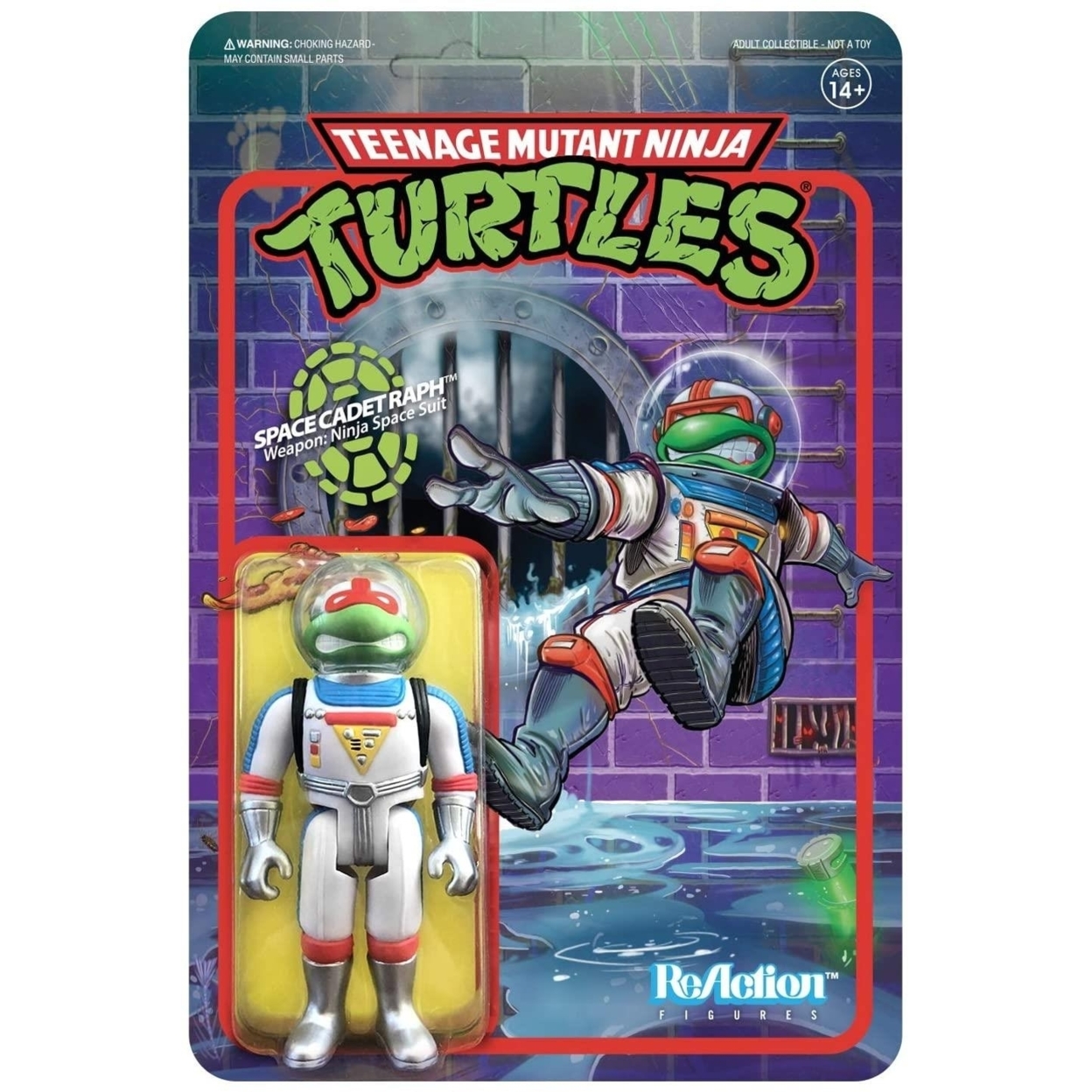
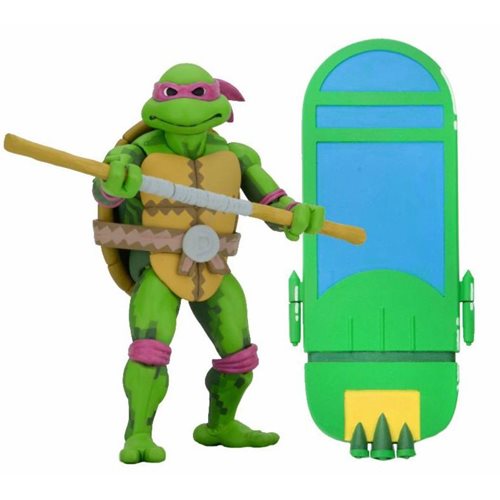
NECA (National Entertainment Collectibles Association) leads the adult collector market with screen-accurate, highly articulated figures based on both the 1990 live-action film and the 1987 animated series, making their convention exclusives prized centerpieces. Super7 produces premium 7-inch 'Ultimates' figures paying tribute to vintage Playmates designs, while high-grade CGC comic grading for the original 1984 Mirage #1 issue remains a cornerstone of high-value comic collecting. Backed by retro re-releases and new figures tying into recent releases like 'Mutant Mayhem', TMNT collectibles maintain powerful demand and strong market value.
The original 1984 Mirage comic book featured all four Turtles wearing identical red bandanas before the 1987 cartoon introduced blue, purple, and orange colors.